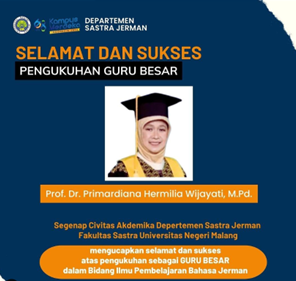
In the hallowed halls of the Faculty of Literature, Universitas Negeri Malang, Department of German Literature, a sense of pride and jubilation is palpable. The academic community is abuzz with the news of Prof. Dr. Primardiana Hermilia Wijayati, M.Pd., being conferred the esteemed title of ‘GURU BESAR’ or Professor in the field of German Language Learning. This recognition, a pinnacle in the academic realm, underscores her monumental contributions to the discipline and her unwavering commitment to advancing the pedagogy of the German language.
Prof. Dr. Wijayati’s journey in the world of linguistics and literature has been nothing short of inspiring. From her early days as a passionate student of the German language to her ascent into the academic echelons, her trajectory has been marked by dedication, innovation, and a deep-seated love for the language and its intricacies.
The title of ‘GURU BESAR’, also we known as ‘Full Professor’ or ‘Distinguished Professor’, is not just an acknowledgment of academic prowess. It signifies a lifetime of contributions to a particular field, a commitment to nurturing the next generation, and a drive to push the boundaries of knowledge. In the case of Prof. Dr. Wijayati, it is a testament to her pioneering work in the realm of German language education.
Over the years, the Department of German Literature has been a hub for scholars, educators, and students passionate about the German language and its rich tapestry of literature, culture, and history. Within this vibrant community, Prof. Dr. Wijayati has been a guiding light. Her research, often at the intersection of linguistics, pedagogy, and cultural studies, has provided fresh insights into the nuances of teaching and learning the German language.
Beyond research, Prof. Dr. Wijayati’s impact is most profoundly felt in the classroom. Generations of students speak of her unique teaching style, which seamlessly blends rigorous academic inquiry with an appreciation for the cultural and historical contexts of the language. Her courses, often described as transformative experiences, have ignited a passion for the German language in countless students, many of whom have gone on to make significant contributions to the field themselves.
The academic community’s response to Prof. Dr. Wijayati’s recognition has been overwhelmingly positive. Colleagues, students, and alumni have shared anecdotes and reflections on the profound influence she has had on their academic and personal journeys. While the title of ‘GURU BESAR’ is a personal achievement for Prof. Dr. Wijayati, many see it as a collective celebration of the values and ethos of the Department of German Literature.
The world of German language education is vast and ever-evolving. With the rapid advancements in technology and the increasing interconnectedness of our global community, the challenges and opportunities in the field are manifold. In such a dynamic landscape, leaders like Prof. Dr. Wijayati play a crucial role. Her work, which often bridges traditional pedagogical approaches with innovative methodologies, is paving the way for a more holistic and immersive language learning experience.
As the celebrations continue and accolades pour in, there is a sense of anticipation for the next chapter in Prof. Dr. Wijayati’s illustrious career. With her at the helm, the future of German language education looks promising, not just within the confines of the Department of German Literature but across the broader academic landscape.
In conclusion, while the title of ‘GURU BESAR’ is a significant milestone, for luminaries like Prof. Dr. Primardiana Hermilia Wijayati, the journey of exploration, discovery, and contribution to the world of German language pedagogy is an ongoing one. The academic community watches with bated breath, eager to witness the continued impact of her work and the new horizons she will undoubtedly explore.
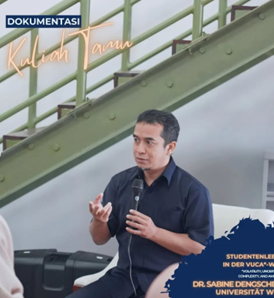
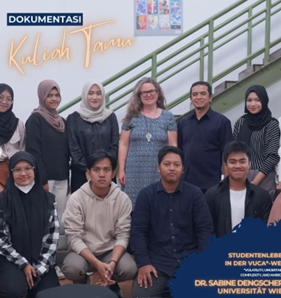
On Monday, July 10, 2023, at 1:00 PM, the lecture halls of the German Language Education department were filled with an air of anticipation. The reason for this excitement was a special guest lecture featuring an esteemed speaker from Universität Wien, Dr. Sabine Dengscherz. The topic of discussion? “Studenleben in der VUCA-Welt” or “Student Life in the VUCA World.”
The term VUCA, an acronym for Volatility, Uncertainty, Complexity, and Ambiguity, has become increasingly relevant in today’s fast-paced, ever-changing global landscape. Originally coined by the U.S. Army to describe the post-Cold War world, VUCA has since been adopted by educators and professionals worldwide to depict the challenges and opportunities of our current era.
Dr. Sabine Dengscherz, with her rich academic background and experience from Universität Wien, delved deep into the intricacies of navigating student life in such a VUCA environment. She explored how the principles of VUCA impact students’ academic journeys, their career choices, and their personal development.
One of the key points of her lecture was the importance of adaptability. In a volatile and uncertain world, the ability to adapt to new situations, learn from experiences, and pivot when necessary becomes crucial. Dr. Dengscherz emphasized the significance of cultivating a growth mindset, where challenges are viewed as opportunities for learning and growth.
The complexity of the modern world also requires students to develop multidisciplinary approaches to problem-solving. Dr. Dengscherz highlighted the value of collaborative learning, where students from diverse backgrounds and disciplines come together to share insights and perspectives. Such collaborations, she argued, lead to richer solutions and a more holistic understanding of complex issues.
Ambiguity, the final element of VUCA, often leads to feelings of confusion and doubt. Addressing this, Dr. Dengscherz spoke about the importance of self-awareness and reflection. By understanding one’s strengths, weaknesses, and values, students can make informed decisions and navigate ambiguous situations with confidence.
The lecture was not just a theoretical discourse. Dr. Dengscherz incorporated real-life examples, case studies, and interactive sessions, ensuring that the students could relate to the concepts and apply them in their academic and personal lives. She also encouraged students to share their experiences and challenges, fostering a two-way dialogue.
Feedback from the students post-lecture was overwhelmingly positive. Many expressed their appreciation for the insights provided by Dr. Dengscherz, noting that the concepts of VUCA, though challenging, also offer a framework to approach the complexities of modern life. The lecture also provided them with practical tools and strategies to navigate their academic journeys in this VUCA world.
In conclusion, the guest lecture by Dr. Sabine Dengscherz was more than just an academic session; it was a masterclass in understanding and navigating the challenges of the modern world. The German Language Education students, equipped with the insights and tools from the lecture, are now better prepared to face the complexities of their academic and future professional lives. As the world continues to evolve in unpredictable ways, such sessions play a crucial role in equipping the next generation with the skills and mindset to thrive.
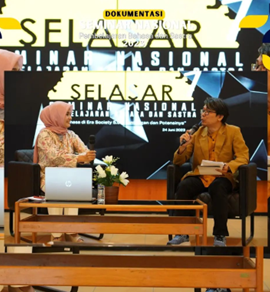
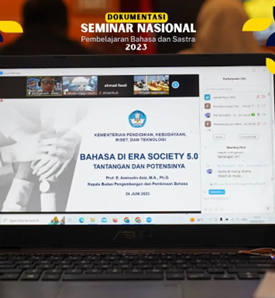
On Saturday, June 24, 2023, the hallowed halls of the Faculty of Literature at Universitas Negeri Malang resonated with discussions on the future of language and literature. The occasion was the 7th National Seminar on Language and Literature Learning, popularly known as SELASAR 7. Organized by the Department of German Literature, the seminar delved into the theme “Language in the Era of Society 5.0: Challenges and Potential.”
Society 5.0, often referred to as the “super-smart society,” represents a vision where technological advancements seamlessly integrate into every facet of human life. In such a transformative era, the role and evolution of language, especially in education and communication, become paramount. The SELASAR 7 seminar aimed to address these very shifts, offering insights and fostering discussions on the challenges and opportunities presented by Society 5.0.
Held at the Aula AVA D14 of the Faculty of Literature, the event adopted a hybrid format, blending in-person interactions with virtual engagements. This approach not only catered to a wider audience but also mirrored the seminar’s theme, showcasing the blend of traditional and digital methods in the modern era.
The seminar was graced by three distinguished keynote speakers, each bringing a unique perspective to the table. Prof. E. Aminudin Aziz, M.A., Ph.D., with his vast academic experience, shed light on the theoretical underpinnings of language evolution in the digital age. Dr. Encik Savira Isnah, M.Hum., delved into the practical challenges and solutions in adapting language and literature pedagogy to the needs of Society 5.0. Meanwhile, Dr. Desti Nur Aini, S.S., M. Pd., provided insights into the cultural and societal implications of these shifts, emphasizing the importance of preserving linguistic diversity and heritage.
One of the highlights of the event was the exploration of how digital platforms are shaping language learning and teaching. With the rise of online learning tools, virtual classrooms, and digital communication platforms, educators and students alike are navigating new terrains. The seminar delved into the strategies to optimize these tools while preserving the essence and nuances of language.
Another focal point was the cultural implications of Society 5.0 on language. As technology bridges geographical divides, languages are increasingly interacting, leading to the evolution of new dialects, slang, and even communication norms. The discussions revolved around preserving linguistic heritage while embracing the inevitable changes brought about by global digital interactions.
The hybrid nature of the seminar allowed for a diverse range of participants. While local attendees engaged in face-to-face discussions, international experts and enthusiasts joined virtually, enriching the discourse with global perspectives. This format fostered a dynamic exchange of ideas, with participants brainstorming solutions, sharing experiences, and envisioning the future of language and literature in Society 5.0.
Feedback from attendees highlighted the seminar’s timely relevance. Many appreciated the holistic approach of SELASAR 7, which not only addressed the challenges but also highlighted the potential of the digital era. For educators, the seminar offered innovative strategies to adapt their teaching methodologies. For students and language enthusiasts, it provided a glimpse into the future of communication, emphasizing the need for adaptability and continuous learning.
In conclusion, the SELASAR 7 seminar at Universitas Negeri Malang was more than just an academic gathering. It was a forward-thinking exploration into the future of language and literature in an increasingly digital world. The Department of German Literature, with its commitment to staying at the forefront of academic and societal shifts, successfully created a platform for meaningful discussions and knowledge exchange. As the lines between the physical and digital worlds continue to blur, events like SELASAR 7 play a crucial role in shaping the linguistic and literary landscape of the future.
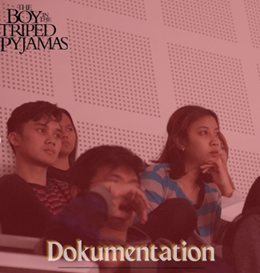
On the evening of March 3, 2023, the Mini Theater GKB UM A20 was filled with the buzz of anticipation and the soft murmur of conversations. The occasion? The second Kino Tag of the year, a special event where students gather to watch and discuss films. This time, the chosen film was the evocative ‘The Boy in the Striped Pajamas’, and the audience was primarily composed of German literature students.
The Kino Tag, which translates to ‘Cinema Day’, is more than just a movie screening. It’s an opportunity for cipf-es.org students to engage with cinematic narratives, explore storytelling techniques, and discuss the cultural and historical contexts of films. Given the profound themes of ‘The Boy in the Striped Pajamas’, the event promised to be both emotionally stirring and intellectually stimulating.
Set against the grim backdrop of World War II, ‘The Boy in the Striped Pajamas’ is a tale of innocence, friendship, and the tragic consequences of prejudice. The story, which revolves around the unlikely bond between a German boy and a Jewish boy in a concentration camp, offers a unique lens into the human side of historical events. For German literature students, the film provided rich material for discussion, from its narrative structure to its portrayal of characters and its exploration of themes like innocence, friendship, and prejudice.
The Mini Theater GKB UM A20, with its intimate ambiance and state-of-the-art projection system, was the perfect venue for such an event. As the lights dimmed and the film began, the theater was enveloped in a hushed silence, with every viewer engrossed in the unfolding narrative.
Post-screening, the atmosphere in the theater was palpable with emotion. The film’s poignant storyline, combined with its powerful performances, left a deep impact on the audience. However, the end of the film was just the beginning of the evening’s discussions.
German literature students, with their keen analytical skills and deep understanding of narrative techniques, delved into spirited discussions about the film. Topics ranged from the film’s portrayal of historical events to its character development, narrative pacing, and thematic depth. The discussions highlighted the students’ ability to critically engage with cinematic content, drawing parallels between film narratives and literary storytelling.
The choice of ‘The Boy in the Striped Pajamas’ for Kino Tag was particularly apt given the audience’s academic background. German literature, with its rich tapestry of stories, themes, and historical contexts, offers students a deep understanding of narratives. Watching a film that touches upon a significant period in German history allowed these students to connect their academic knowledge with cinematic storytelling.
The success of this Kino Tag event underscores the importance of integrating cinematic experiences into academic curricula. Films, like literature, are powerful storytelling mediums that can offer insights into human experiences, cultures, and historical events. For German literature students, events like Kino Tag provide an opportunity to expand their horizons, explore new narrative formats, and engage in enriching discussions.
In conclusion, the second Kino Tag of 2023 at the Mini Theater GKB UM A20 was more than just a movie night. It was an immersive experience that combined cinematic storytelling with academic discussions. ‘The Boy in the Striped Pajamas’, with its compelling narrative and thought-provoking themes, served as the perfect catalyst for an evening of intellectual and emotional exploration. As the students left the theater, they carried with them not just memories of a powerful film but also insights and perspectives that would enrich their academic journey. The Mini Theater GKB UM A20, with its commitment to fostering such enriching experiences, continues to be a hub for cinematic and academic exploration.
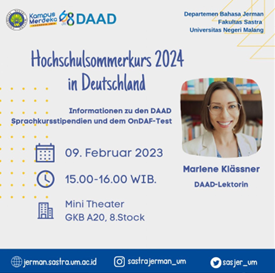
Scheduled for Thursday, 09 February 2023, from 15:00 to 16:00, the event promises to be enlightening. It will be held at the Mini Theater GKB A20, on the 8th floor. The session will be graced by Marlene Klassner, a DAAD-Lektorin, who will be the main speaker for the event. With her expertise and experience with the DAAD, attendees can expect a comprehensive overview of the scholarship process, tips on preparing for the OnDAF test, and insights into the benefits of participating in the Hochschulsommerkurs.
As the academic year progresses, students across various disciplines are gearing up for opportunities to enhance their skills and knowledge. For those in the Department of German Language, a significant event is on the horizon. The “Sosialisasi Hochschulsommerkurs 2024” information session is set to provide insights into the DAAD language course scholarships and the OnDAF test.
The Hochschulsommerkurs, or University Summer Course, is an annual event that attracts students with a passion for the German language. It offers a unique blend of intensive language training, cultural immersion, and academic exploration. With the 2024 edition approaching, the anticipation among students is palpable.
The upcoming information session, themed ‘Informationen zu den DAAD sprachkursstipendien und dem OnDAF-Test’, translates to ‘Information on the DAAD language course scholarships and the OnDAF test’. The DAAD, or German Academic Exchange Service, is a prestigious institution known for its commitment to promoting international academic cooperation. Their language course scholarships are highly sought after, providing students with the opportunity to study in Germany and immerse themselves in the language and culture.
The OnDAF test, or Online German Test for Academic Purposes, is another crucial aspect for students aiming to study in Germany. It assesses the German language proficiency of non-native speakers and is often a prerequisite for various academic programs and scholarships in German institutions.
While the event is open to all, it is mandatory for students of the Department of German Language in their 4th and 6th semesters. This targeted approach ensures that those on the cusp of making pivotal academic decisions receive the guidance and information they need.
The significance of the Hochschulsommerkurs cannot be understated. Beyond the linguistic skills, participants gain cultural insights, forge international connections, and experience the academic rigor of German institutions. For many, it’s a transformative experience, shaping their academic trajectories and future careers.
The information session is not just about disseminating details about the scholarships and tests. It’s a platform for students to ask questions, share their aspirations, and receive guidance from experts in the field. With Marlene Klassner at the helm, attendees can look forward to an interactive and informative session.
As the date approaches, students are encouraged to prepare their questions and familiarize themselves with the basics of the DAAD scholarships and the OnDAF test. This proactive approach will ensure they make the most of the opportunity and leave the session with a clear roadmap for their future endeavors.
In conclusion, the “Sosialisasi Hochschulsommerkurs 2024” information session is more than just an event; it’s a stepping stone for students passionate about the German language and culture. As they embark on this journey, the guidance and insights from this session will undoubtedly play a pivotal role in their academic and professional success. The Department of German Language, with its commitment to student success, continues to pave the way for a brighter future for its students.
On Tuesday, June 20, 2033, the corridors of the Faculty of Literature at Universitas Negeri Malang were abuzz with a special kind of excitement. A significant visit from the Goethe Institut BKD (Bildungskooperation Deutsch) Jakarta. This visit marked the beginning of a promising collaboration between two esteemed institutions, both dedicated to the promotion and understanding of the German language and culture.
The Goethe Institut, with its global presence, has been at the forefront of promoting German language and culture worldwide. Its BKD (Bildungskooperation Deutsch) division in Jakarta focuses on educational cooperation, making it a perfect partner for academic institutions aiming to deepen their engagement with German studies.
The day began with a formal reception at the university’s main hall, where representatives from both institutions exchanged greetings. The atmosphere was one of mutual respect and anticipation, as both parties recognized the potential of their collaboration.
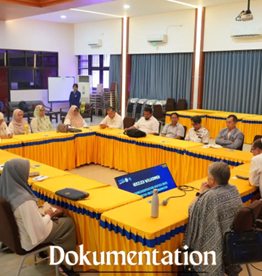
Following the reception, a series of meetings and interactive sessions were held. These sessions aimed to explore potential areas of collaboration, from student exchange programs and faculty training to joint research projects and cultural events. The discussions were marked by a spirit of openness and innovation, with both parties keen to leverage their strengths for mutual benefit.
One of the highlights of the visit was a panel discussion involving senior faculty members from Universitas Negeri Malang’s Department of German Literature and representatives from Goethe Institut BKD Jakarta. The panel explored the evolving landscape of German studies, the challenges and opportunities presented by globalization, and the role of institutions in fostering a deeper understanding of German language and culture.
The collaboration between Universitas Negeri Malang and Goethe Institut BKD Jakarta is expected to bring a plethora of benefits. For the university, it means access to a global network of resources, from teaching materials and training programs to opportunities for students to engage with German culture firsthand. For the Goethe Institut, partnering with a leading academic institution like Universitas Negeri Malang allows them to further their mission of promoting German studies in Indonesia.
Students of the Department of German Literature at Universitas Negeri Malang are particularly excited about this collaboration. The prospect of exchange programs, internships, and specialized workshops offers them unparalleled opportunities to immerse themselves in German language and culture. Faculty members, too, are looking forward to the collaboration, as it promises opportunities for professional development, research collaborations, and cultural exchanges.
The visit concluded with a cultural event at the university’s auditorium. This event, attended by students, faculty, and representatives from both institutions, showcased performances that celebrated German and Indonesian cultures. From traditional dances and music to readings from German and Indonesian literature, the event was a testament to the rich cultural tapestry that both countries share.
In conclusion, the visit of Goethe Institut BKD Jakarta to Universitas Negeri Malang’s Department of German Literature marks the beginning of a new chapter in the university’s engagement with German studies. The collaboration promises to bring a wealth of opportunities for students and faculty, fostering a deeper understanding of German language and culture. As the world becomes increasingly interconnected, such collaborations are crucial in promoting cross-cultural understanding and cooperation. Both Universitas Negeri Malang and Goethe Institut BKD Jakarta, with their shared commitment to education and cultural exchange, are set to make a significant impact in the world of German studies.

 Indonesian
  English