The Faculty of Letters at Universitas Negeri Malang is taking a significant step toward enhancing the quality of German language education by partnering with Goethe Institute to bring in Marlene, a native German instructor. Marlene will be teaching students in the 3rd and 7th semesters of the German Language Education Program, as part of the university’s ongoing commitment to providing an immersive and enriching educational experience.
The collaboration with Goethe Institute and the inclusion of a native German speaker like Marlene aim to strengthen the language proficiency and cultural understanding of students in the German Language Education Program. geyimedicals.es Marlene, with her native fluency and deep cultural insights, is expected to provide an authentic and comprehensive learning experience for the students.
Dr. Moch. Syahri, the Dean of the Faculty of Letters at the Universitas Negeri Malang, expressed his enthusiasm about this partnership, saying, “We are dedicated to offering our students the highest quality education in German language studies. By bringing in Marlene from Goethe Institute, we are taking a significant leap forward in achieving that goal. Our students will have the privilege of learning from a native speaker who can impart not only language skills but also cultural nuances.”
Marlene’s role will primarily focus on students in their 3rd and 7th semesters, tailoring her teaching methods to suit their specific needs and levels of proficiency. This tailored approach is expected to boost students’ language skills and prepare them for advanced academic and professional opportunities where German language proficiency is essential.
The collaboration with Goethe Institute also opens doors for cultural exchanges, workshops, and collaborative research initiatives between the State University of Malang and the esteemed German cultural institute. This partnership underscores the commitment of both institutions to fostering cross-cultural understanding and promoting excellence in German language education.
As the new academic semester begins, the Faculty of Literature at the State University of Malang and Goethe Institute’s Marlene are excited to embark on this journey of educational enrichment, ensuring that students receive the highest standard of education in German language and culture.
For more information about this partnership and the German Language Education Program at the State University of Malang, please contact the Faculty of Literature’s administrative office.
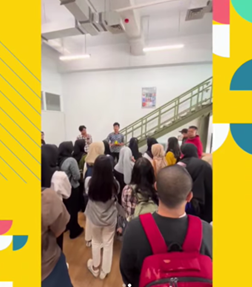
The campus of Universitas Negeri Malang was abuzz with excitement as the Department of German Language welcomed its newest batch of students for the academic year 2023. As part of their orientation, the fresh faces of the German Language Education program were treated to a special tour of the Mediothek, a significant hub of resources and learning within the university.
The Mediothek, known for its vast collection of media resources, serves as a bridge between traditional academic learning and modern multimedia tools. For students of the German Language Education program, it offers a treasure trove of resources, from German literature and research papers to audio-visual aids that enhance language learning.
As the students entered the Mediothek, they were greeted by a team of senior students and faculty members, ready to guide them through the various sections. The tour began with an introduction to the extensive collection of German literature, ranging from classics by Goethe and Schiller to contemporary works by emerging authors. Students were encouraged to explore the shelves, pick out books of interest, and even sign up for reading groups.
The next stop was the multimedia section, where students were introduced to the latest language learning software, interactive German tutorials, and a vast collection of German films and music. The highlight was a demonstration of a language learning app that uses augmented reality to provide immersive language experiences. Students could point their devices at objects, and the app would provide the German word for it, complete with pronunciation guides.
Another significant section of the Mediothek is the research and academic resources area. Here, students were shown how to access a vast digital database of research papers, articles, and academic journals related to German studies. Faculty members emphasized the importance of utilizing these resources for academic projects and research.
Throughout the tour, the atmosphere was one of curiosity and enthusiasm. The new students were eager to explore, ask questions, and immerse themselves in the world of German studies. Many were seen jotting down notes, bookmarking resources, and even signing up for workshops and seminars hosted by the Mediothek.
Post-tour, the students gathered for a feedback session. The overwhelming response was positive, with many expressing their excitement about the resources available and the opportunities for immersive language learning. Some mentioned their eagerness to dive into German literature, while others were keen on exploring multimedia tools to enhance their language skills.
The faculty members of the Department of German Language were equally enthusiastic. They emphasized the importance of the Mediothek as a vital tool for holistic language learning. By providing students with a blend of traditional and modern resources, the Mediothek ensures that students receive a well-rounded education, equipping them with the skills needed for the 21st century.
In conclusion, the Mediothek tour for the new students of the German Language Education program at Universitas Negeri Malang was more than just an orientation activity. It was an invitation to explore, learn, and immerse themselves in the rich world of German studies. As the academic year begins, these students are now better equipped to navigate their academic journey, with the Mediothek serving as a constant companion and guide. Here’s to a year of exploration, discovery, and academic excellence for the class of 2023!
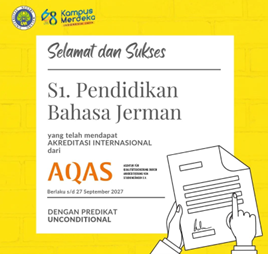
In a significant stride for academic excellence, Universitas Negeri Malang’s undergraduate program in German Language Education has been honored with an international accreditation from AQAS. The announcement, made on March 10, 2023, revealed that the program received the ‘Unconditional’ predicate, underscoring its high standards and commitment to delivering top-tier education.
The AQAS, or Agency for Quality Assurance through Accreditation of Study Programs, is a renowned international body that evaluates and accredits academic programs based on rigorous criteria. An accreditation from AQAS is a testament to a program’s quality, relevance, and alignment with international standards. For Universitas Negeri Malang’s German Language Education program to receive the ‘Unconditional’ predicate means it met all the stringent criteria set by AQAS without any reservations.
This achievement is particularly noteworthy given the global landscape of higher education. As universities worldwide strive to ensure their programs meet international standards, an accreditation from a respected body like AQAS sets a program apart. It signifies that students enrolled in the program are receiving an education that is on par with globally recognized institutions.
Universitas Negeri Malang’s German Language Education program has long been known for its comprehensive curriculum, experienced faculty, and a holistic approach to language education. The program emphasizes not just linguistic proficiency but also cultural understanding, critical thinking, and pedagogical skills. This well-rounded approach ensures that graduates are equipped to teach the German language effectively and with cultural sensitivity.
The international accreditation is also expected to open up new opportunities for the program. It can pave the way for international collaborations, student exchange programs, and research partnerships. With the AQAS seal of approval, the program can attract students from across the globe, further enhancing its diversity and enriching the learning experience for all students.
The journey to achieving this accreditation was undoubtedly rigorous. AQAS evaluates programs based on a range of criteria, including curriculum design, faculty qualifications, research output, student support services, and graduate outcomes. The ‘Unconditional’ predicate indicates that Universitas Negeri Malang’s German Language Education program excelled in all these areas.
Faculty members, students, and alumni of the program have expressed their pride and joy at this achievement. For the faculty, it’s a recognition of their dedication to maintaining high academic standards and their commitment to continuous improvement. For students, it’s an affirmation that they are part of a program that is globally recognized. And for alumni, it adds an additional layer of prestige to their degrees.
The broader Universitas Negeri Malang community also has reason to celebrate. This international accreditation enhances the university’s reputation on the global stage. It showcases the institution’s commitment to academic excellence and its ability to deliver programs that meet international standards.
In the ever-evolving landscape of higher education, where institutions are constantly striving to innovate and improve, recognitions like this serve as milestones. They provide a moment for reflection on the achievements so far and a renewed motivation to continue the pursuit of excellence.
In conclusion, Universitas Negeri Malang’s achievement in securing international accreditation for its German Language Education program is a testament to its unwavering commitment to quality education. The ‘Unconditional’ predicate from AQAS is not just a recognition of the program’s current standards but also a challenge to continue raising the bar. As the program basks in the glow of this achievement, it is also gearing up for the future, ready to embrace new challenges and opportunities that come its way. The journey of academic excellence, after all, is a continuous one, and Universitas Negeri Malang is clearly on the right path.
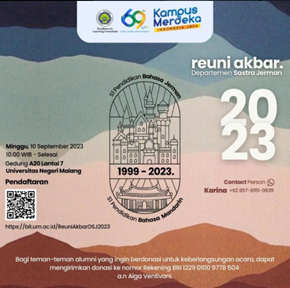
As Universitas Negeri Malang approaches its 69th anniversary, a wave of nostalgia is set to sweep over its campus. In a heartwarming gesture to commemorate this milestone, a grand reunion for the alumni of the Department of German Literature has been announced. Scheduled for Sunday, September 10, 2023, the event promises to be a memorable gathering, rekindling old bonds and celebrating shared memories.
The venue for this special occasion is the Gedung Kuliah Bersama (GKB) A20, located on the 7th floor. The event is slated to begin at 10:00 AM and will continue until the last story is shared, and the last laugh is echoed.
Universitas Negeri Malang, with its rich history and commitment to academic excellence, has been a nurturing ground for countless students over the years. The Department of German Literature, in particular, has been a hub for those passionate about the German language, culture, and literature. Over the decades, it has produced alumni who have gone on to make significant contributions in various fields, both in Indonesia and abroad.
The reunion aims to bring together these diverse individuals, each with their unique journey and story. It’s an opportunity for former classmates to reconnect, for seniors to share their wisdom with juniors, and for the younger generation to draw inspiration from the achievements of their predecessors.
The day’s agenda is packed with activities designed to evoke memories and create new ones. There will be interactive sessions where alumni can share their experiences post-graduation, offering insights into the various paths they’ve taken.
One of the highlights of the reunion is expected to be a panel discussion featuring some of the department’s distinguished alumni. They will discuss the evolving landscape of German literature, the challenges and opportunities in the field, and the role of institutions like Universitas Negeri Malang in shaping the future of German studies.
A cultural program is also on the cards, with performances that celebrate German and Indonesian cultures. From traditional dances and music to readings from German and Indonesian literature, the event promises to be a feast for the senses.
Of course, no reunion is complete without reminiscing about the good old days. There will be dedicated sessions for batch-wise meet-ups, allowing classmates to catch up, share stories, and relive their university days. The university’s campus, with its familiar nooks and corners, will serve as the perfect backdrop for these nostalgic trips.
Feedback from the alumni community has been overwhelmingly positive since the announcement of the reunion. Many have expressed their excitement about returning to their alma mater, reconnecting with old friends, and being a part of the university’s 69th-anniversary celebrations.
In conclusion, the upcoming grand reunion for the alumni of the Department of German Literature at Universitas Negeri Malang is not just an event; it’s a celebration of shared memories, achievements, and the enduring spirit of the university. As the date approaches, the campus is abuzz with preparations, ensuring that the event is as memorable as the years that the alumni spent there. Here’s to old memories, new stories, and the timeless legacy of Universitas Negeri Malang.
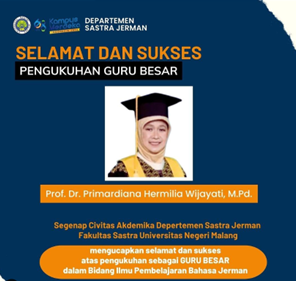
In the hallowed halls of the Faculty of Literature, Universitas Negeri Malang, Department of German Literature, a sense of pride and jubilation is palpable. The academic community is abuzz with the news of Prof. Dr. Primardiana Hermilia Wijayati, M.Pd., being conferred the esteemed title of ‘GURU BESAR’ or Professor in the field of German Language Learning. This recognition, a pinnacle in the academic realm, underscores her monumental contributions to the discipline and her unwavering commitment to advancing the pedagogy of the German language.
Prof. Dr. Wijayati’s journey in the world of linguistics and literature has been nothing short of inspiring. From her early days as a passionate student of the German language to her ascent into the academic echelons, her trajectory has been marked by dedication, innovation, and a deep-seated love for the language and its intricacies.
The title of ‘GURU BESAR’, also we known as ‘Full Professor’ or ‘Distinguished Professor’, is not just an acknowledgment of academic prowess. It signifies a lifetime of contributions to a particular field, a commitment to nurturing the next generation, and a drive to push the boundaries of knowledge. In the case of Prof. Dr. Wijayati, it is a testament to her pioneering work in the realm of German language education.
Over the years, the Department of German Literature has been a hub for scholars, educators, and students passionate about the German language and its rich tapestry of literature, culture, and history. Within this vibrant community, Prof. Dr. Wijayati has been a guiding light. Her research, often at the intersection of linguistics, pedagogy, and cultural studies, has provided fresh insights into the nuances of teaching and learning the German language.
Beyond research, Prof. Dr. Wijayati’s impact is most profoundly felt in the classroom. Generations of students speak of her unique teaching style, which seamlessly blends rigorous academic inquiry with an appreciation for the cultural and historical contexts of the language. Her courses, often described as transformative experiences, have ignited a passion for the German language in countless students, many of whom have gone on to make significant contributions to the field themselves.
The academic community’s response to Prof. Dr. Wijayati’s recognition has been overwhelmingly positive. Colleagues, students, and alumni have shared anecdotes and reflections on the profound influence she has had on their academic and personal journeys. While the title of ‘GURU BESAR’ is a personal achievement for Prof. Dr. Wijayati, many see it as a collective celebration of the values and ethos of the Department of German Literature.
The world of German language education is vast and ever-evolving. With the rapid advancements in technology and the increasing interconnectedness of our global community, the challenges and opportunities in the field are manifold. In such a dynamic landscape, leaders like Prof. Dr. Wijayati play a crucial role. Her work, which often bridges traditional pedagogical approaches with innovative methodologies, is paving the way for a more holistic and immersive language learning experience.
As the celebrations continue and accolades pour in, there is a sense of anticipation for the next chapter in Prof. Dr. Wijayati’s illustrious career. With her at the helm, the future of German language education looks promising, not just within the confines of the Department of German Literature but across the broader academic landscape.
In conclusion, while the title of ‘GURU BESAR’ is a significant milestone, for luminaries like Prof. Dr. Primardiana Hermilia Wijayati, the journey of exploration, discovery, and contribution to the world of German language pedagogy is an ongoing one. The academic community watches with bated breath, eager to witness the continued impact of her work and the new horizons she will undoubtedly explore.
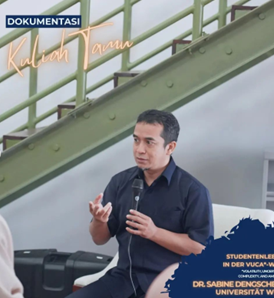
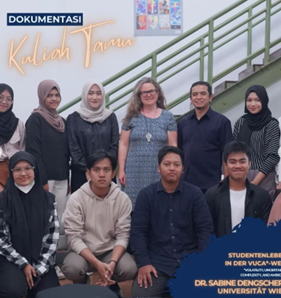
On Monday, July 10, 2023, at 1:00 PM, the lecture halls of the German Language Education department were filled with an air of anticipation. The reason for this excitement was a special guest lecture featuring an esteemed speaker from Universität Wien, Dr. Sabine Dengscherz. The topic of discussion? “Studenleben in der VUCA-Welt” or “Student Life in the VUCA World.”
The term VUCA, an acronym for Volatility, Uncertainty, Complexity, and Ambiguity, has become increasingly relevant in today’s fast-paced, ever-changing global landscape. Originally coined by the U.S. Army to describe the post-Cold War world, VUCA has since been adopted by educators and professionals worldwide to depict the challenges and opportunities of our current era.
Dr. Sabine Dengscherz, with her rich academic background and experience from Universität Wien, delved deep into the intricacies of navigating student life in such a VUCA environment. She explored how the principles of VUCA impact students’ academic journeys, their career choices, and their personal development.
One of the key points of her lecture was the importance of adaptability. In a volatile and uncertain world, the ability to adapt to new situations, learn from experiences, and pivot when necessary becomes crucial. Dr. Dengscherz emphasized the significance of cultivating a growth mindset, where challenges are viewed as opportunities for learning and growth.
The complexity of the modern world also requires students to develop multidisciplinary approaches to problem-solving. Dr. Dengscherz highlighted the value of collaborative learning, where students from diverse backgrounds and disciplines come together to share insights and perspectives. Such collaborations, she argued, lead to richer solutions and a more holistic understanding of complex issues.
Ambiguity, the final element of VUCA, often leads to feelings of confusion and doubt. Addressing this, Dr. Dengscherz spoke about the importance of self-awareness and reflection. By understanding one’s strengths, weaknesses, and values, students can make informed decisions and navigate ambiguous situations with confidence.
The lecture was not just a theoretical discourse. Dr. Dengscherz incorporated real-life examples, case studies, and interactive sessions, ensuring that the students could relate to the concepts and apply them in their academic and personal lives. She also encouraged students to share their experiences and challenges, fostering a two-way dialogue.
Feedback from the students post-lecture was overwhelmingly positive. Many expressed their appreciation for the insights provided by Dr. Dengscherz, noting that the concepts of VUCA, though challenging, also offer a framework to approach the complexities of modern life. The lecture also provided them with practical tools and strategies to navigate their academic journeys in this VUCA world.
In conclusion, the guest lecture by Dr. Sabine Dengscherz was more than just an academic session; it was a masterclass in understanding and navigating the challenges of the modern world. The German Language Education students, equipped with the insights and tools from the lecture, are now better prepared to face the complexities of their academic and future professional lives. As the world continues to evolve in unpredictable ways, such sessions play a crucial role in equipping the next generation with the skills and mindset to thrive.