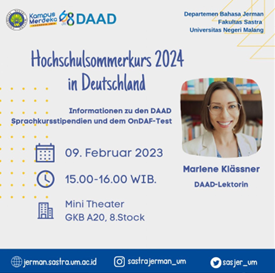
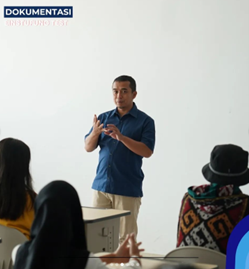
Scheduled for Thursday, 09 February 2023, from 15:00 to 16:00, the event promises to be enlightening. It will be held at the Mini Theater GKB A20, on the 8th floor. The session will be graced by Marlene Klassner, a DAAD-Lektorin, who will be the main speaker for the event. With her expertise and experience with the DAAD, attendees can expect a comprehensive overview of the scholarship process, tips on preparing for the OnDAF test, and insights into the benefits of participating in the Hochschulsommerkurs.
As the academic year progresses, students across various disciplines are gearing up for opportunities to enhance their skills and knowledge. For those in the Department of German Language, a significant event is on the horizon. The “Sosialisasi Hochschulsommerkurs 2024” information session is set to provide insights into the DAAD language course scholarships and the OnDAF test.
The Hochschulsommerkurs, or University Summer Course, is an annual event that attracts students with a passion for the German language. It offers a unique blend of intensive language training, cultural immersion, and academic exploration. With the 2024 edition approaching, the anticipation among students is palpable.
The upcoming information session, themed ‘Informationen zu den DAAD sprachkursstipendien und dem OnDAF-Test’, translates to ‘Information on the DAAD language course scholarships and the OnDAF test’. The DAAD, or German Academic Exchange Service, is a prestigious institution known for its commitment to promoting international academic cooperation. Their language course scholarships are highly sought after, providing students with the opportunity to study in Germany and immerse themselves in the language and culture.
The OnDAF test, or Online German Test for Academic Purposes, is another crucial aspect for students aiming to study in Germany. It assesses the German language proficiency of non-native speakers and is often a prerequisite for various academic programs and scholarships in German institutions.
While the event is open to all, it is mandatory for students of the Department of German Language in their 4th and 6th semesters. This targeted approach ensures that those on the cusp of making pivotal academic decisions receive the guidance and information they need.
The significance of the Hochschulsommerkurs cannot be understated. Beyond the linguistic skills, participants gain cultural insights, forge international connections, and experience the academic rigor of German institutions. For many, it’s a transformative experience, shaping their academic trajectories and future careers.
The information session is not just about disseminating details about the scholarships and tests. It’s a platform for students to ask questions, share their aspirations, and receive guidance from experts in the field. With Marlene Klassner at the helm, attendees can look forward to an interactive and informative session.
As the date approaches, students are encouraged to prepare their questions and familiarize themselves with the basics of the DAAD scholarships and the OnDAF test. This proactive approach will ensure they make the most of the opportunity and leave the session with a clear roadmap for their future endeavors.
In conclusion, the “Sosialisasi Hochschulsommerkurs 2024” information session is more than just an event; it’s a stepping stone for students passionate about the German language and culture. As they embark on this journey, the guidance and insights from this session will undoubtedly play a pivotal role in their academic and professional success. The Department of German Language, with its commitment to student success, continues to pave the way for a brighter future for its students.
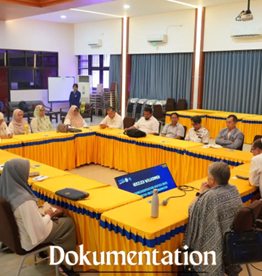
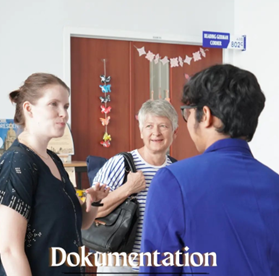
On Tuesday, June 20, 2033, the corridors of the Faculty of Literature at Universitas Negeri Malang were abuzz with a special kind of excitement. A significant visit from the Goethe Institut BKD (Bildungskooperation Deutsch) Jakarta. This visit marked the beginning of a promising collaboration between two esteemed institutions, both dedicated to the promotion and understanding of the German language and culture.
The Goethe Institut, with its global presence, has been at the forefront of promoting German language and culture worldwide. Its BKD (Bildungskooperation Deutsch) division in Jakarta focuses on educational cooperation, making it a perfect partner for academic institutions aiming to deepen their engagement with German studies.
The day began with a formal reception at the university’s main hall, where representatives from both institutions exchanged greetings. The atmosphere was one of mutual respect and anticipation, as both parties recognized the potential of their collaboration.
Following the reception, a series of meetings and interactive sessions were held. These sessions aimed to explore potential areas of collaboration, from student exchange programs and faculty training to joint research projects and cultural events. The discussions were marked by a spirit of openness and innovation, with both parties keen to leverage their strengths for mutual benefit.
One of the highlights of the visit was a panel discussion involving senior faculty members from Universitas Negeri Malang’s Department of German Literature and representatives from Goethe Institut BKD Jakarta. The panel explored the evolving landscape of German studies, the challenges and opportunities presented by globalization, and the role of institutions in fostering a deeper understanding of German language and culture.
The collaboration between Universitas Negeri Malang and Goethe Institut BKD Jakarta is expected to bring a plethora of benefits. For the university, it means access to a global network of resources, from teaching materials and training programs to opportunities for students to engage with German culture firsthand. For the Goethe Institut, partnering with a leading academic institution like Universitas Negeri Malang allows them to further their mission of promoting German studies in Indonesia.
Students of the Department of German Literature at Universitas Negeri Malang are particularly excited about this collaboration. The prospect of exchange programs, internships, and specialized workshops offers them unparalleled opportunities to immerse themselves in German language and culture. Faculty members, too, are looking forward to the collaboration, as it promises opportunities for professional development, research collaborations, and cultural exchanges.
The visit concluded with a cultural event at the university’s auditorium. This event, attended by students, faculty, and representatives from both institutions, showcased performances that celebrated German and Indonesian cultures. From traditional dances and music to readings from German and Indonesian literature, the event was a testament to the rich cultural tapestry that both countries share.
In conclusion, the visit of Goethe Institut BKD Jakarta to Universitas Negeri Malang’s Department of German Literature marks the beginning of a new chapter in the university’s engagement with German studies. The collaboration promises to bring a wealth of opportunities for students and faculty, fostering a deeper understanding of German language and culture. As the world becomes increasingly interconnected, such collaborations are crucial in promoting cross-cultural understanding and cooperation. Both Universitas Negeri Malang and Goethe Institut BKD Jakarta, with their shared commitment to education and cultural exchange, are set to make a significant impact in the world of German studies.
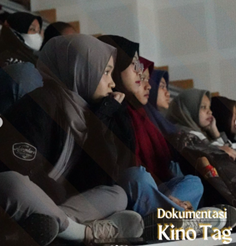
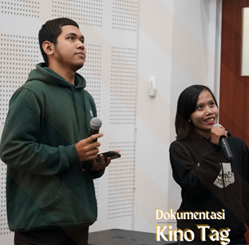
On a crisp evening on April 7, 2023, the Mini Theater GKB UM A20 was abuzz with excitement. The reason? The third installment of Kino Tag for the year, a cherished event where students come together to celebrate the magic of cinema. This time, the spotlight was on the film ‘der ganz große traum‘, internationally known as ‘Lessons of A Dream’, a cinematic treat that drew a keen audience, primarily consisting of German literature students.
Kino Tag, which translates to ‘Cinema Day’, has become a hallmark event for those passionate about films, especially those that resonate with the German language and culture. The Mini Theater GKB UM A20, with its cozy ambiance and state-of-the-art projection system, offers the perfect setting for such an immersive experience.
‘Lessons of A Dream’, set in the late 19th century, is a captivating tale of an English teacher who introduced soccer to Germany. The film beautifully intertwines the themes of passion, innovation, and the challenges of introducing something new to a traditional setting. For the German literature students in attendance, the film was not just a visual delight but also a narrative that resonated with cultural and historical significance.
As the lights dimmed and the opening credits rolled, there was a palpable sense of anticipation in the air. The audience was transported to a different era, captivated by the lush cinematography, compelling storyline, and nuanced performances. The film’s portrayal of perseverance in the face of adversity, the clash of cultures, and the transformative power of sports provided ample food for thought.
Post-screening, the theater was alive with animated discussions. The German literature students, with their keen analytical skills and deep appreciation for narrative structures, delved into various aspects of the film. Conversations ranged from the film’s historical accuracy to its character development, thematic depth, and its portrayal of societal norms of the time.
The choice of ‘Lessons of A Dream’ for this Kino Tag was particularly apt. The film, with its focus on language, culture, and societal change, offered a rich tapestry of discussion points for students specializing in German literature. It provided a unique lens to explore the interplay of language, culture, and societal evolution, themes that are often central to literary studies.
Beyond the film itself, Kino Tag serves as a platform for students to engage with cinema as a medium of storytelling. In an age where streaming services dominate and individual viewing is the norm, communal film watching events like Kino Tag offer a refreshing change. They underscore the importance of shared experiences, collective discussions, and the unique joy of watching a film with a like-minded community.
The success of this Kino Tag also speaks to the broader commitment of the Mini Theater GKB UM A20 to promote cultural and cinematic appreciation. By curating a diverse range of films, from classics to contemporary gems, the theater has become a hub for film enthusiasts, offering them a space to explore, learn, and engage with cinema in all its glory.
In conclusion, the third Kino Tag of 2023 at the Mini Theater GKB UM A20 was more than just a film screening. It was a celebration of cinema, culture, and community. ‘Lessons of A Dream’, with its rich narrative and historical significance, served as the perfect catalyst for an evening of reflection, discussion, and cinematic appreciation. As the German literature students left the theater, they carried with them not just memories of a beautiful film but also insights and perspectives that would enrich their academic journey. The Mini Theater GKB UM A20, with its blend of cinematic and cultural events, continues to be a beacon for those passionate about the world of films.
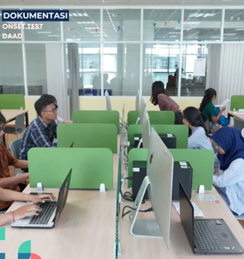
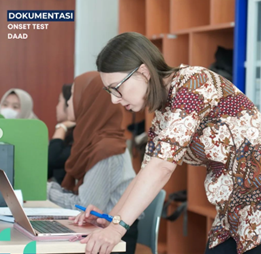
On Thursday, August 25, 2023, at 8:00 AM, the Co-Working Space was a hive of activity as students from Universitas Negeri Malang (UM) and Universitas Negeri Surabaya (UNESA) gathered for the onSET Test. Organized by the German Academic Exchange Service (DAAD), this test is a significant tool for German language learners to gauge their proficiency levels.
The onSET Test, known for its precision and comprehensive assessment, is a computer-based language test that evaluates the linguistic capabilities of participants in German. It’s a crucial step for students who are keen on understanding where they stand in their language learning journey and for those who wish to pursue further studies or opportunities in Germany.
The Co-Working Space, with its state-of-the-art facilities, provided the perfect environment for the test. Upon arrival, students were greeted by representatives from DAAD, who provided a brief overview of the test format and addressed any queries. As the test commenced, the room was filled with a palpable sense of concentration, with students deeply engrossed in showcasing their German language skills.
The participation of students from both UM and UNESA highlighted the growing interest in German studies in the region. Both universities have robust German Language Education programs, and the collaboration with DAAD for the onSET Test is a testament to their commitment to providing students with the best opportunities to excel.
One of the significant aspects of the onSET Test is its relevance to the DAAD Hochschulsommerkurs, a renowned summer course program in Germany. Students who perform well in the onSET Test have the advantage when applying for this program, which offers immersive language learning experiences in Germany. The Hochschulsommerkurs is not just about language learning; it’s an opportunity for cultural exchange, academic enrichment, and building international networks.
Post-test, students were seen discussing their experiences, sharing insights, and expressing their hopes for good results. Many were keen on understanding how the test could pave the way for future academic and professional opportunities in Germany. The atmosphere was a blend of relief post-test and anticipation for the results.
Feedback from participants was overwhelmingly positive. Many appreciated the smooth organization by DAAD and the opportunity to take the test in a conducive environment like the Co-Working Space. Others expressed their gratitude for the chance to gauge their language proficiency, noting that such assessments provide clarity and direction in their academic journey.
The faculty members from both UM and UNESA were present to support their students. They emphasized the importance of regular assessments like the onSET Test in ensuring that students are on the right track in their language learning journey. Such tests, they noted, provide both motivation and direction, helping students set goals and work towards them.
In conclusion, the onSET Test organized by DAAD at the Co-Working Space was more than just an assessment; it was an event that brought together German language learners from two prominent universities, fostering a sense of community and shared goals. As the results are awaited, there’s a sense of optimism in the air. Regardless of the outcomes, one thing is clear: the passion for German studies is alive and well among students from UM and UNESA. Here’s to many more collaborations and opportunities for these budding linguists in the future!
On Thursday, August 24, 2023, at 9:00 AM, the campus of Universitas Negeri Malang buzzed with a unique blend of excitement and nervousness. The Einstufungtest, or the placement test, was being conducted for the new students of the German Language Education program. This test is a crucial step in determining the course offerings suitable for each student during their academic journey.
The German Language Education program at Universitas Negeri Malang has always emphasized the importance of tailoring the educational experience to meet the individual needs of its students. Recognizing that students come with varied levels of proficiency in the German language, the Einstufungtest serves as a tool to gauge their current language skills. Based on the results, students are then placed in courses that match their proficiency level, ensuring that they receive instruction that is both challenging and appropriate for their skill set.
The day began with students assembling in the designated examination halls, equipped with their writing tools and identification. After a brief orientation, the test commenced. Designed by a team of expert linguists and educators, the Einstufungtest covered various aspects of the German language, including reading comprehension, grammar, vocabulary, and listening skills. The aim was to provide a comprehensive assessment of the students’ abilities, ensuring that they are placed in courses where they can thrive.
Post-test, the atmosphere was one of relief and anticipation. Students exchanged their experiences, discussing the sections they found challenging and those they breezed through. For many, the Einstufungtest was their first formal assessment in the German language, making it a significant milestone in their academic journey.
The faculty and administration of the German Language Education program have always prioritized the well-being and academic success of their students. The decision to conduct the Einstufungtest is a testament to this commitment. By ensuring that students are placed in courses suited to their proficiency level, the program aims to provide an optimal learning environment where students can build a strong foundation in the German language and culture.
Feedback from students post-test was overwhelmingly positive. Many appreciated the structured format of the test, noting that it provided a clear indication of their strengths and areas for improvement. Others expressed their eagerness to start their courses, confident that the Einstufungtest results would guide them to the right classes.
In the days following the test, faculty members will be busy evaluating the results, ensuring that each student is placed in the appropriate course level. This meticulous process ensures that students receive instruction tailored to their needs, setting them up for success in their academic endeavors.
In conclusion, the Einstufungtest conducted for the new students of the German Language Education program at Universitas Negeri Malang is more than just an assessment. It’s a commitment to providing students with the best possible educational experience, ensuring that they embark on their academic journey with confidence and clarity. As the new academic year approaches, the young scholars of the 2023 batch are gearing up for an enriching experience, equipped with the insights from the Einstufungtest. Here’s to a successful academic journey for the bright minds of the German Language Education program!
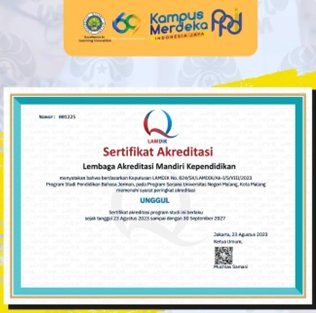
In a momentous announcement on August 23, 2023, the Bachelor’s program in German Language Education was awarded the “Excellent” accreditation, marking a significant milestone in its academic journey. This prestigious recognition, conferred based on the decision by LAMDIK under decree No. 824/SK/LAMDIK/Ak-I/S/VIII/2023, is a testament to the program’s unwavering commitment to delivering top-tier education in the realm of German studies.
The “Excellent” accreditation is a rigorous standard set by LAMDIK, reflecting a program’s holistic quality, from its curriculum and faculty credentials to its infrastructure and student outcomes. Achieving this status is no small feat and speaks volumes about the dedication, hard work, and vision of the German Language Education program’s leadership, faculty, and students.
Over the years, the German Language Education program has been at the forefront of offering a comprehensive and immersive experience for students passionate about the German language and culture. The curriculum, meticulously designed, ensures that students not only gain linguistic proficiency but also acquire a deep understanding of German literature, history, and societal nuances.
A significant factor contributing to the program’s success is its faculty. Comprising a blend of experienced academics and industry professionals, they bring to the classroom a dynamic mix of theoretical knowledge and practical insights. Their commitment to fostering a nurturing and challenging academic environment has played a pivotal role in shaping the program’s reputation.
Beyond the classroom, the program emphasizes real-world exposure. Students have access to exchange programs with German universities, internships in German-speaking environments, and cultural immersion opportunities. These experiences ensure that graduates are well-rounded, culturally sensitive, and ready to navigate the global landscape where German language skills are in demand.
The program’s infrastructure, too, has been a focal point of investment and innovation. Modern language labs equipped with the latest technology, a library boasting a vast collection of German literature and research resources, and collaborative spaces for students have all contributed to creating an environment conducive to learning and exploration.
The impact of the “Excellent” accreditation extends beyond just a badge of honor. For current students, it reinforces their confidence in the quality of education they are receiving. For prospective students, it serves as an indicator of the program’s caliber, making it an attractive choice for those keen on pursuing German studies. Alumni, many of whom have gone on to achieve significant success in various fields, can take pride in being associated with a program that has received such a distinguished accolade.
Furthermore, this recognition opens up avenues for enhanced collaborations with German institutions, fostering academic exchanges, joint research projects, and cultural immersion programs. Such collaborations are invaluable in ensuring that the program remains at the cutting edge of German studies, continually evolving to meet the changing demands of the global landscape.
The university community has responded to the announcement with jubilation. Faculty members view it as a validation of their relentless efforts to maintain high academic standards. Students see it as an affirmation of their choice to be part of the program. Alumni, spread across the globe, have sent in their congratulations, reminiscing about their time at the university and expressing their pride in being part of such a distinguished program.
In sum, the “Excellent” accreditation awarded to the Bachelor’s program in German Language Education is not just an acknowledgment of its past achievements but also a beacon guiding its future endeavors. As the program continues on its journey of academic excellence, this accolade serves as a reminder of its core values and its mission to produce graduates who are not only linguistically proficient but also culturally astute. The future looks bright for the German Language Education program, and this recognition is just another feather in its already illustrious cap.


 Indonesian
  English