
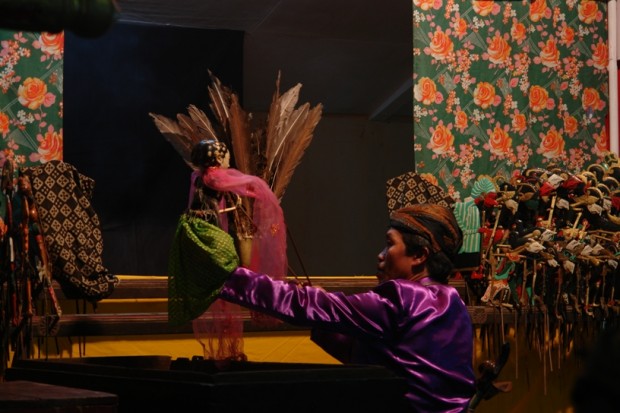
The Wayang Krucil in Gondowangi Village, Wagir District, Malang Regency, in Nganjuk is called Wayang Thimplong, as told by Anita Oktariyani, student of the Department of Art and Design, Faculty of Letters, State University of Malang. Wayang Thimplong is an original art from Nganjuk Regency, to be precise in Jetis Village, and Bongkal, Pace District, which is unique as wayang krucil in Malang, which is a puppet body made of tree wood. menthaos, or pule tree, while the hands are made of animal skin. This puppet is called Wayang Thimplong because the performance time is only accompanied by several musical instruments, including, gong, xylophone, drums, fiddle, and kenong. The combination of these instruments when played sounds and sounds like a sound plong plong plong or ketimplong ketimplong so that this puppet is called Wayang Thimplong.
The embodiment of the king in the wayang thimplong or wayang krucil is depicted with a slender appearance, eye liyepan, nose
If we look at the meaning of the symbolism of the Thimplong / krucil wayang figures from shapes and colors, the king figures symbolize figures with noble and great characters. A knight figure, symbolizing a character with a calm and great character. Figure daughter/ noble and great woman. Figure sabrang symbolizes a tough and proud character. The symbolism of the color red is emotion, the color white stands for pure soul, and the color black means the dark side, constancy and mystery.
There are 75 puppet characters in Gondowangi Village, Wagir Subdistrict, Malang Regency, however, 3 of them have been broken (broken) because they are hundreds of years old, while the remaining 72 pieces are still intact and can be recognized in their original condition, even though the coloring has been repainted . Luckily there are some people who still want to care about this art. One of them is Mr. Sugondo. He works daily as a library staff at the Faculty of Letters, State University of Malang. And Anita, who is a student who cares about culture, feels challenged to do research which will be used as material for her thesis assignment. Hopefully there are still people who care about our nation's culture, especially those from Malang.
 English
  Indonesian